
Where is Lake Superior?
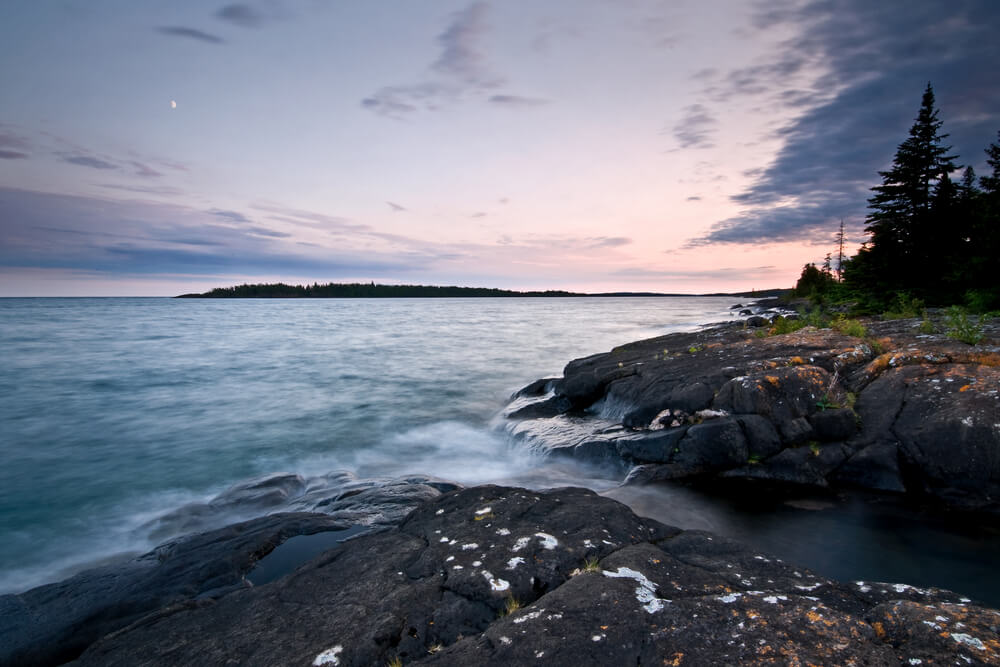
When you are deciding where to visit in the U.P., Lake Superior may come to mind as a top bucket list option. After all, this clean, clear, and cold freshwater Great Lake is one of the most impressive natural wonders in the world! But where is Lake Superior in relation to the Upper Peninsula and the rest of Michigan and Wisconsin? Which towns in the Upper Peninsula is Lake Superior closest to? Not to worry, below, we will discuss exactly where Lake Superior is, how to get there, and where else to visit when you are in the Upper Peninsula of Michigan. That way, you can effortlessly chart your travels and enjoy Pure Michigan fun!
The Location of Lake Superior
Lake Superior sits on the Northern edge of Wisconsin, the Northwestern edge of Minnesota, the southern shore of Ontario, and stretches over half of Michigan. So, it is easy to see why many people are unsure of its precise location! Indeed, Lake Superior has a massive surface area that can be hard to wrap your head around. However, if you are trying to figure out where it is, just know that it spreads along varying expanses of Michigan, Minnesota, Wisconsin, and Ontario.
Specifically, it is located between the cities of Terrace Bay (Canada), Sault Ste. Marie, Michigan, Duluth, Minnesota, and Ashland, Wisconsin. Encompassing the Upper Peninsula of Michigan, which divides its waters from those of Lake Michigan and Lake Huron, this massive great lake is 31,700 mi²!

All About Lake Superior
Lake Superior is the world’s largest freshwater lake by surface area, and it is the deepest, cleanest, and clearest of all of the Great Lakes. If you have never seen it, you definitely should consider visiting Michigan and checking it out! This lake is surrounded by stunning natural features like forests, cliffs, and all kinds of beaches. There are also townships, bays, islands, lighthouses, and more to explore in the vicinity of this Great Lake. Here are some things to know about Lake Superior if you have been wondering where to visit in the Upper Peninsula region.
Lake Superior Fish, Fauna, and Wildlife
Fish and wildlife are abundant along the shores of Lake Superior! Many birds, wolves, bears, pine martens, and deer roam the highlands along its Northern shores. Additionally, a variety of hardwood trees and conifers create the ideal environment for wildlife to thrive. The old-growth forests have been supporting a host of creatures for thousands of years. Ferns, lichens, mosses, wildflowers, wetlands, and more, can be found near the watershed.
The History of Lake Superior
Lake Superior is an ancient lake with a fascinating history that stretches back thousands of years! Scientists suspect that Lake Superior was formed during a midcontinent rift that carved its arced shape. The name Superior actually refers to the lake’s massive size and designates its position among the other Great Lakes. The lake refills with new water every 200 years or so. Numerous water sources flow into Lake Superior from rivers in Michigan, Canada, and more. The many connecting waterways of Lake Superior have made it an important hub of trade through the centuries and in modern times. The first recorded people to settle in the Lake Superior region were the Laurel people, who were known for trading an array of goods including metals.
Lake Superior Size and Depth
Lake Superior measures approximately 160 miles wide and around 350 miles long. The water volume of Lake Superior is 2,900 cubic miles, and its vast shoreline stretches over 2,720 miles. The deepest point in Lake Superior is about 1,300 feet, or 400 meters, from the surface. This means that the lake rarely freezes all of the way over. This lake also boasts incredibly clear waters. The average underwater visibility in Lake Superior is about 27 feet or 8.2 meters.
Weather and Water Temperatures
As with all of the other Great Lakes, Superior is prone to a phenomenon called lake effect snow. However, in the summertime, the weather around Lake Superior is generally pleasant, with temperatures ranging from hot to warm or moderate. Winter temperatures near Lake Superior rarely fall lower than 30° f. This means that temperatures near the lake are often higher than nearby inland temperatures, provided the wind is still.
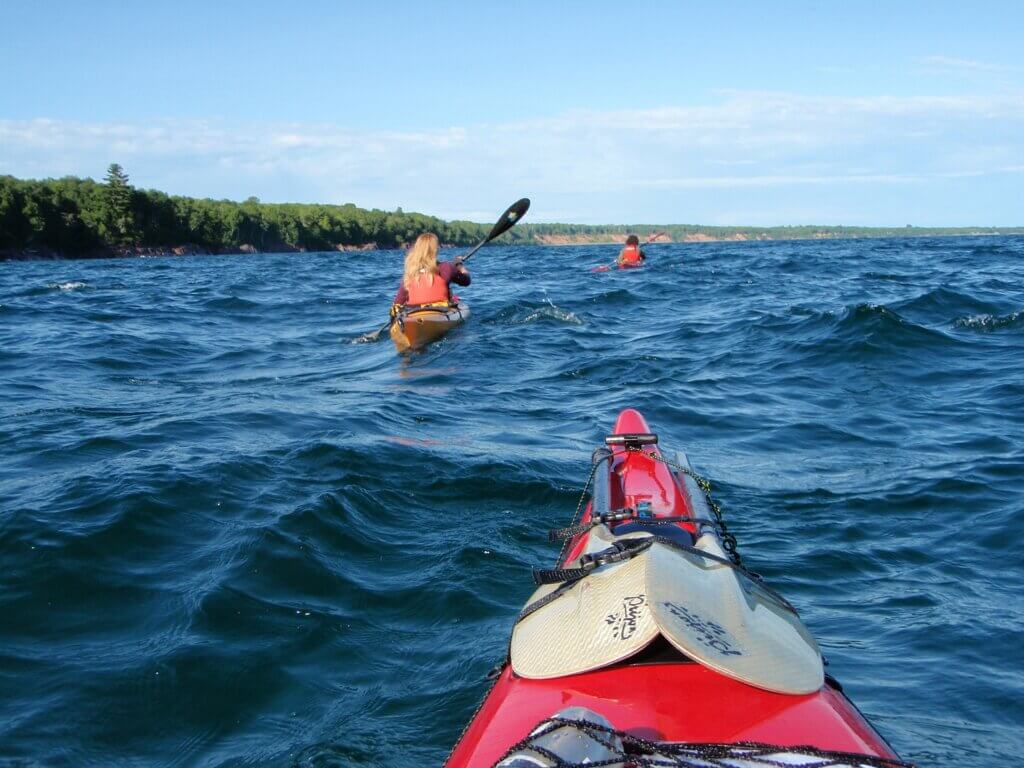
In June and July, the lake’s waters are generally calm. In the months of October and November, Lake Superior is prone to storms. During the heart of winter, the lake usually gets iced over in many areas. Anywhere from 40% to 91% of Lake Superior will usually be covered by ice in the winter months. Although Lake Superior froze over in 2014, most years, the lake does not reach more than 90% ice at the surface. The lake’s temperatures and freezing patterns are monitored carefully due to its importance to industries such as fishing, commercial shipping, and hydropower generation.
The average interior water temperature of Lake Superior is around 40° f. However, during the summer months, the lake’s temperature can reach as high as 72° F, with higher water temperatures nearer to the shoreline. Temperatures are impacted by the amount of surface ice left to melt from the previous winter.
Plan Your Visit to Lake Superior – Travel Ironwood Can Help!
All in all, Lake Superior has a massive surface area that extends all along the borders of Michigan. This immense body of freshwater spans the distance between the United States and Canada, Northern Michigan, Minnesota, and Wisconsin. It is the largest of all of the Great Lakes when measured by surface volume! It is also the deepest and cleanest, with a healthy supply of fresh water replenishing it from numerous rivers and waterways. So, if you were wondering where to visit in the U.P., Lake Superior is one stunning destination that you will not want to miss!
For assistance planning your next visit to Michigan’s U.P., check out Travel Ironwood. You can find out which towns in the Upper Peninsula to stay in, what beaches are top-rated, and more! Michigan is full of splendid wonders near Lake Superior. Whether you want to explore the Porcupine Mountains, stay in charming cabins in Ironwood, or rock hunt near cascading waterfalls, the U.P. is one of the most exciting and interesting places in all of America!