
November’s Dark Skies

It’s November, and the days are getting shorter, but shorter days shouldn’t be something to get down about. With less sunlight comes more darkness, offering more time to enjoy a full view of the night sky!
Stargazing around Ironwood in November can be a magical experience due to the area’s minimal light pollution, crisp air, and long nights. Throughout November, there are many celestial events to watch for. Celestial events are astronomical occurrences that include meteor showers, eclipses, solstices, and equinoxes. A few celestial events to look out for in the month of November are the Leonid meteor shower, Milky Way visibility, and the chance to view planets and winter constellations as well as the northern lights!
WHAT TO LOOK FOR
The Leonid Meteor Shower is an annual meteor shower that peaks in mid November, bringing spectacular views of shooting stars. The best times to view this shower will be between November 16 and 18, from midnight to dawn. The entire span of activity for the shower runs from November 3 to December 2.
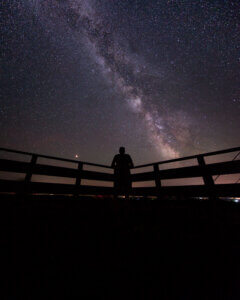 As the year goes on, Milky Way visibility begins to lessen, but in November, especially in darker areas such as Michigan’s Upper Peninsula viewers can still catch a glimpse.
November skies also offer clear views of winter constellations. A few that are available for viewing include Orion, Taurus, and Gemini. In addition to constellations, some planets shine brightly and are often visible to the naked eye, including Jupiter and Saturn.
The Upper Peninsula in November offers the possibility of spotting the Northern Lights. Spotting the Northern Lights can be a bit unpredictable but the month of November often brings higher chances of seeing this magical event. The Northern lights are most visible on dark, clear nights between 10 pm and 2am. We suggest heading to the shorelines of Lake Superior to try and catch a glimpse.
The best way to find out what’s visible in the night sky is by using stargazing apps like SkyView, Star Walk, or Stellarium, which help viewers identify celestial objects in real time. To track North Lights visibility download apps such as Aurora Forecast and my Aurora Forecasts.