
Backpacking the Porcupine Mountains: Everything to Know Before You Go
Asking yourself, “Where are the Porcupine Mountains?” is a sure sign that you are ready for an adventure. Located in the Upper Peninsula of Michigan, the Porcupine Mountains Wilderness State Park spans over 60,000 acres of gorgeous old-growth forest that includes all the rivers, waterfalls, and wildlife you need to get inspired to go backpacking.
While backpacking is a popular activity in the state park, you’ll want to remember that from the moment you leave the visitor’s station, you are stepping into a constantly changing wilderness paradise that can often be unpredictable. Whether you’ve been backpacking dozens of times or are just starting out, it helps to know how to enjoy a safe and meaningful hiking trip before you even start packing.
As with any backpacking trip, you’ll want to remember to do a little research about the area, and this guide will help you get familiar with the climate, territory, and general rules and regulations so that you don’t make a single misstep.

Expect to Be Responsible for Your Group’s Safety
People sometimes confuse state parks with amusement parks, leading to potentially dangerous behavior. While there are park rangers to help look out for potential hazards, you can’t depend upon anyone but yourself for survival if something goes amiss in the wild.
Most problems that occur while backpacking are preventable with proper preparation. When you pick a trail, choose one that fits the abilities of the least experienced or most vulnerable person in your group. The Porcupine Mountains have something for everyone, and even the easiest trail will give you an up-close experience with the native plants, water features, and wildlife that inhabit the area.
Pick a Home Base Nearby
The State Park offers several fun places to camp, and you’ll also benefit from being close to towns nearby, where you can rest and recuperate in less rustic lodging. Ironwood, MI, is only around a half hour away from the main entrance to the park, which gives you a comfy place to rest after your road trip or flight before you go backpacking the next morning. While you’re backpacking, you can also opt to camp at a primitive site or visit one of the many campgrounds that offer unique experiences.
Here are a few places that you might opt to stay:
- Yurts or cabins at the State Park
- Union Bay Campground
- Presque Isle Campground
- local hotels and motels
As you choose your lodging, remember that some campgrounds and sites are first-come, first-serve only. Always have an alternative place to stay in mind since many of the top spots fill up early.
Choose the Season Carefully
The most popular time to visit the Porcupine Mountains is between May and October. During this time, the temperatures are relatively moderate, but they do tend to heat up towards the end of the summer. The fall foliage begins to reach its most vibrant colors sometime near the end of September to mid-October, which is a fantastic time to go hiking.
While you can hike in the winter, you’ll want to carry extra gear to keep you safe. The temperatures drop dramatically during this time, and backpacking for an overnight camping trip is only recommended if you’re experienced with potentially hazardous and frigid outdoor conditions. Keep in mind that you’ll see the Upper Peninsula waterfalls cascading at their fullest capacity in the early spring when the snow melts send them rushing over cliffs and river rocks.
Choose Your Trail
There are so many different places to hike in the Porcupine Mountains that it’s nearly impossible to list them all. But, a few stand out for their unique features that make it easier to find a hiking path that fits your group’s abilities and goals for the trip. Check out these trails and their characteristics for inspiration.
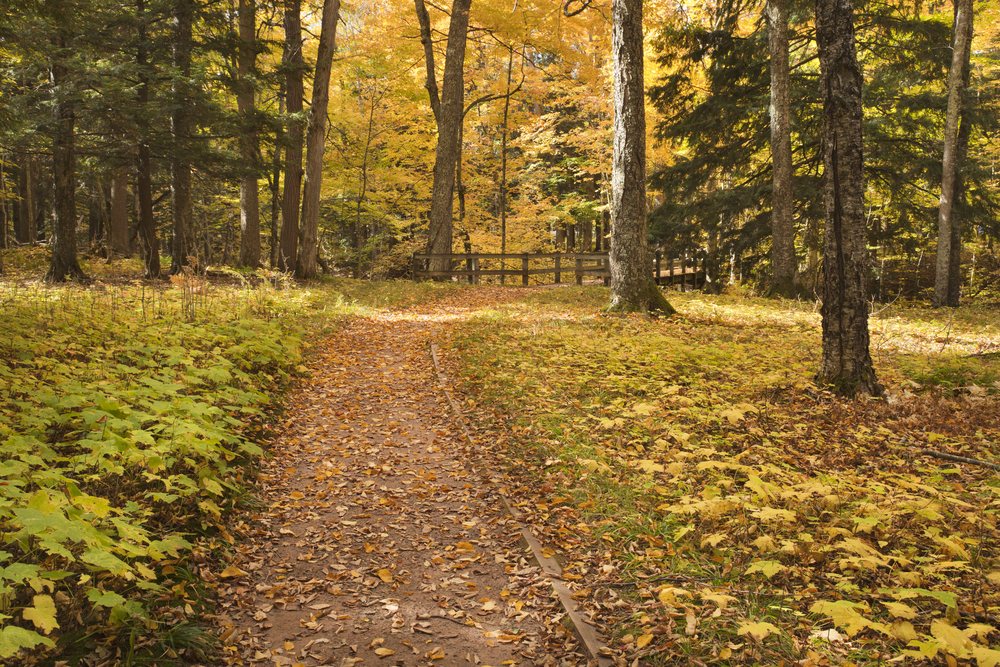
- Lake of the Clouds-most famous but can get busy at times
- Presque Isle Falls Loop-has waterfalls and is the most accessible to people with mobility challenges
- Escarpment Trail-moderate level with the payoff of gorgeous views
- Government Peak Loop-very challenging and goes over three of the major peaks of the mountains
Gather Your Gear
You’ll need all of the typical gear that you’d take on any other hiking trip. Safety equipment, such as a whistle, first-aid kit, and headlamps, are all important. You’ll also want to keep in mind that part of the charm of the Porcupine Mountains is its primitive conditions. While you won’t need to worry about your teenager browsing on their smartphone, you’ll need to remember that you might not be able to use your regular map app to get the latest update on your location. Make sure to carry a compass, paper or downloaded map, and a GPS device that doesn’t rely on a cellular signal.

When you start picking out your tent and other gear made from fabric materials, make sure waterproofing is an essential feature. The Porcupine Mountains are known for being wet at any point during the year. While winter is guaranteed to have some snow and ice, the lake conditions make it easy to get caught in a sudden spring rainstorm. Plus, the snow melt that occurs in the warmer months of the year makes many trails muddy or encumbered by water obstacles. Waterproof, non-skid hiking boots are a must for most backpacking trails.
Know How to Register Upon Your Arrival
While you might be eager to start carving your way down those tree-lined paths, you have one last but essential stop before you venture into the wilderness. Backpackers are required to register at the Visitor’s Center before they begin enjoying the interior of the park. At the Visitor Center, you can get your pass along with a permit for wilderness camping. If the main center is open, this is also a great time to get real-time information on trail conditions and any other pertinent information. If the center is closed, you can register at one of the self-serve kiosks.
Be Prepared for Wildlife Encounters
Throughout the park, you’ll see well-marked trails and other signs of human activity. Yet, you want to remember that you are constantly stepping into wild animal territory. Most of the wildlife you see in the mountains merely want to continue their regular feeding and shelter-seeking activities. But, there is the potential risk of encountering a black bear. If you choose to camp in the wilderness, use the bear poles for your trash available at most sites. You’ll also want to avoid bringing food into your tent or leaving anything on your campsite that could attract bears and other wildlife. As you hike, remember to stay alert to your surroundings, and feel free to make some noise with your backpacking mates to make animals aware of your presence.
A little prep work and research now means that you’ll have an amazing backpacking trip through one of the most beautiful natural environments on earth. Once you get home and begin sharing about your adventures with your family and friends, you can bet that they’ll be the next ones inquiring about where are the Porcupine Mountains. After experiencing them, you’ll be ready to tell everyone you know about your favorite discoveries. From meandering around Ironwood and dining in unique local restaurants to hiking down a rustic trail that leads to breathtaking waterfalls, you’ll have many stories to share about your time in the Porkies. Travel Ironwood can share more information about the many things to do in the Upper Peninsula.